
Research
Studying neural stem cell specification in the developing human cortex and in glioblastoma
Appointments
Assistant Professor, Department of Biological Chemistry
Biography
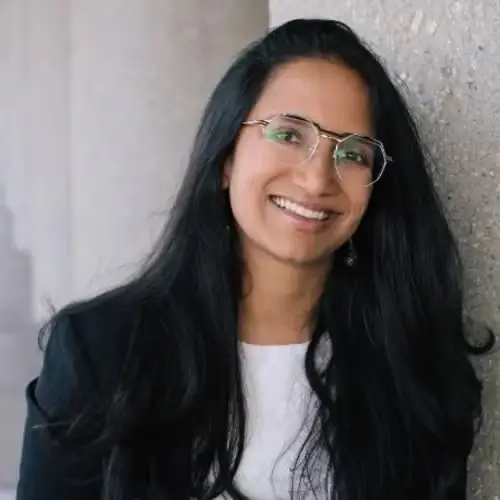
Dr. Aparna Bhaduri earned a B.S in Biochemistry and Cell Biology and a B.A in Political Science from Rice University in 2010. She completed her doctoral studies at Stanford University in Cancer Biology in 2016, where she focused on epithelial tissue differentiation and neoplasms. She was a postdoctoral scholar at the University of California San Francisco in the Eli and Edythe Broad Center of Regeneration Medicine and Stem Cell Research, in the lab of Dr. Arnold Kriegstein where she used single-cell approaches to explore developmental neurobiology and glioblastoma. The Bhaduri Lab opened in 2021 and has been using organoid models of cortical development and brain cancer to understand neural stem cell fate specification. Paired with single-cell characterizations, the lab has used organoids to innovate new approaches to manipulate, model, and measure how human neural stem cells engage in fate specification decisions both in healthy development and in brain cancer. Moving forward, Aparna is excited to continue unraveling the mysteries of the human brain alongside the incredible team of scientists in the lab. In her free time, she enjoys spending time with her husband rock climbing, reading, and puzzling.
Publications
- Bristow, B, Fazzari, E, Bhaduri, A. From cortical development to glioma: neural stem and progenitor programs in tumor heterogeneity. Curr Opin Genet Dev. 2026;102 :102557. doi: 10.1016/j.gde.2026.102557. PubMed PMID:43057059 .
- Schweiger, HE, Robbins, A, Hernandez, S, Moreno-Ochando, A, Cline, I, Doganyigit, K et al.. A foundation model for brain organoid network dynamics uncovers intrinsic computation and convergent disease phenotypes. bioRxiv. 2026; :. doi: 10.64898/2026.10.11.758231. PubMed PMID:42999288 PubMed Central PMC13742634.
- Li, MX, Ge, W, Fazzari, E, Bhaduri, A, Baisiwala, S. Protocol for generating human organoid tumor transplantation and immune-human organoid tumor transplantation models for glioblastoma research. STAR Protoc. 2026;7 (4):104925. doi: 10.1016/j.xpro.2026.104925. PubMed PMID:42961905 PubMed Central PMC13733458.
- Yang, MG, Bhaduri, A. Brain organoids grafted into cortex-free mice will advance human brain research. Nature. 2026;658 (8135):319-320. doi: 10.1038/d41586-026-02967-7. PubMed PMID:42839134 .
- Azizi, L, He, L, Bhaduri, A, Liau, LM, Kornblum, HI, Pajonk, F et al.. Exosome-Mediated Bidirectional Signaling Regulates Glioma Stem-Cell Homeostasis and Radiation-Induced Plasticity. bioRxiv. 2026; :. doi: 10.64898/2026.09.02.748690. PubMed PMID:42818566 PubMed Central PMC13622525.